
Notes from the grave. That I dug for myself.
On duty, burnout, ancestral survival, and the tools I’m using to claw my way back.

Do you know about that Slavic belief that to be reborn, you need to “die” first (metaphorically)? Is this why I keep digging my own grave?
I’m writing to you while trying to figure out how to pay down credit card debt, how to rest while parenting full-time, and how to create when everything feels urgent. In other words, I’m writing to you from yet another grave that I dug myself—curiosity got the better of me, and my desire to get to the root of the problem became the actual problem. I swear, I only started digging with the scientific curiosity of soul exploration… but, as it often goes, I’ve ended up falling in.
Since my birthday trip to Oregon, I’ve come to see just how much of my life is ruled by fear and duty. Duty to my daughter, my husband, my mother. Duty to the idea of what it means to be a good, caring person. And then there’s the fear of what might happen if I stopped trying to hold it all together.
I thought I had healed after realizing how deeply my mother normalized self-sacrifice and how angry she gets when I refuse to lose myself in responsibilities the way she did. But healing isn’t linear. It’s more like a vortex you try to climb out of, and if you get distracted, you find yourself being sucked back in.
I’ve come to realize how many times I’ve sacrificed my health, safety, and financial stability simply because my sense of duty or morality demanded it. How many times I’ve donated profits I couldn’t afford to give, because the cause felt more urgent than my own survival.
The truth is, I do deeply admire the capacity to give of yourself to ease someone else’s suffering. But perhaps I haven’t yet learned how to live with the consequences of that kind of giving.
Creating art, making videos to raise awareness, donating to support the fight for freedom in Ukraine and Palestine—these all felt imperative. I had to do something. Even if it meant losing work opportunities, even if it meant not being able to pay bills. And yet, the wars rage on. Children are still starving. And now I find myself in a place where I can’t even meet the needs of those who rely on me, myself included. In the end, it seems only the enemy gains from this trajectory.
Let me be clear: this isn’t nihilism. It’s not even regret. This is simply an acknowledgment: this is the ditch I dug with my own hands. I can’t complain now that it lacks accommodations.
I’ve been here before. Not in this exact ditch, but something like it. Each time I claw my way out, I take something with me—a tool, a lesson, a scar, a deeper understanding.
The question is - HOW does one climb out?
How does anyone get out of an emotionally dark place or a financial crisis? I’m not sure there’s a universally accepted path, but I can share mine. If it’s not obvious by now, I’m a connoisseur of sorts, and I like to call it character development.
I believe that while my ancestral lineage may have handed me a heavy set of moral obligations—chief among them, self-sacrifice (we still need to have a serious talk about that)—but it also gave me the tools to endure, to recalibrate, to survive.
Resilience and Humour
The phrase I’ve heard most often in my life is, “We’ve been through worse.” It might not sound like much of an affirmation to those outside my lineage, but to me, it offers hope. It reminds me that I’ve inherited enough resilience to get through just about anything. Our people tend to thrive under pressure and to decompose in the absence of any adversity—maybe that’s why we’re so good at creating our own problems. But that’s a conversation for another day.
Resilience’s steady partner is humor. I don’t think this absolute weapon always gets the credit it deserves (especially when it comes to building community). If you don’t laugh, you’ll cry has become my life motto. Humor doesn’t just keep you afloat; it keeps you connected.
At the end of the day, if you can laugh at your fears, are they really that scary?
Here are some of my favorite sayings that could help you lighten the mood:
“Хотели как лучше, получилось как всегда.”
“We wanted the best, but it turned out like always.”
Famously said by Viktor Chernomyrdin, former Russian Prime Minister, during a press conference in 1993. Now, it's a national proverb for good intentions gone wrong.
“Не было бы счастья, да несчастье помогло.”
“There wouldn’t be happiness if misfortune hadn’t helped.”
Optimism with a sigh. The Russian equivalent of a plot twist, healing your life.
“Авось пронесёт.”
“Maybe it’ll blow over.”
A sacred phrase of chaotic survival. No plan. No safety net. Just vibes.
“Думал, дно. Постучали.”
“I thought I hit rock bottom. Then someone knocked from below.”
Possibly the most poetic way to say it could get worse.
“Не откладывай на завтра то, что можно вообще не делать.”
“Don’t put off until tomorrow what you can just not do at all.”
Wisdom meets existential burnout. The only true freedom under late-stage capitalism or a dictatorship.
I may need a separate article on these sayings, because I have so many more. Let me know in the comments if you’re interested.
Spiritual and Physical practice
My spiritual routine (rituals and hygiene) is the structure I lean on when I feel lost, unsure of where to start or where to turn. Even when I’m not actively practicing, it’s still there: steady, waiting, available.
Over the past month, the message I kept receiving was simple: “Take care of your home.” At first, I took it literally—I cleaned, organized, and made my space more comfortable. But the repetition of the message made me pause. I began to suspect I was missing something.
Then it clicked: by “home,” they meant my body—the one true home any of us has. They were right, I have neglected the home of my body for way too long.
My first morning run brought an omen, proof that I had finally heard my ancestors right. Just as I turned the corner of my building, I saw her …lying still beneath a bush of pink flowers.
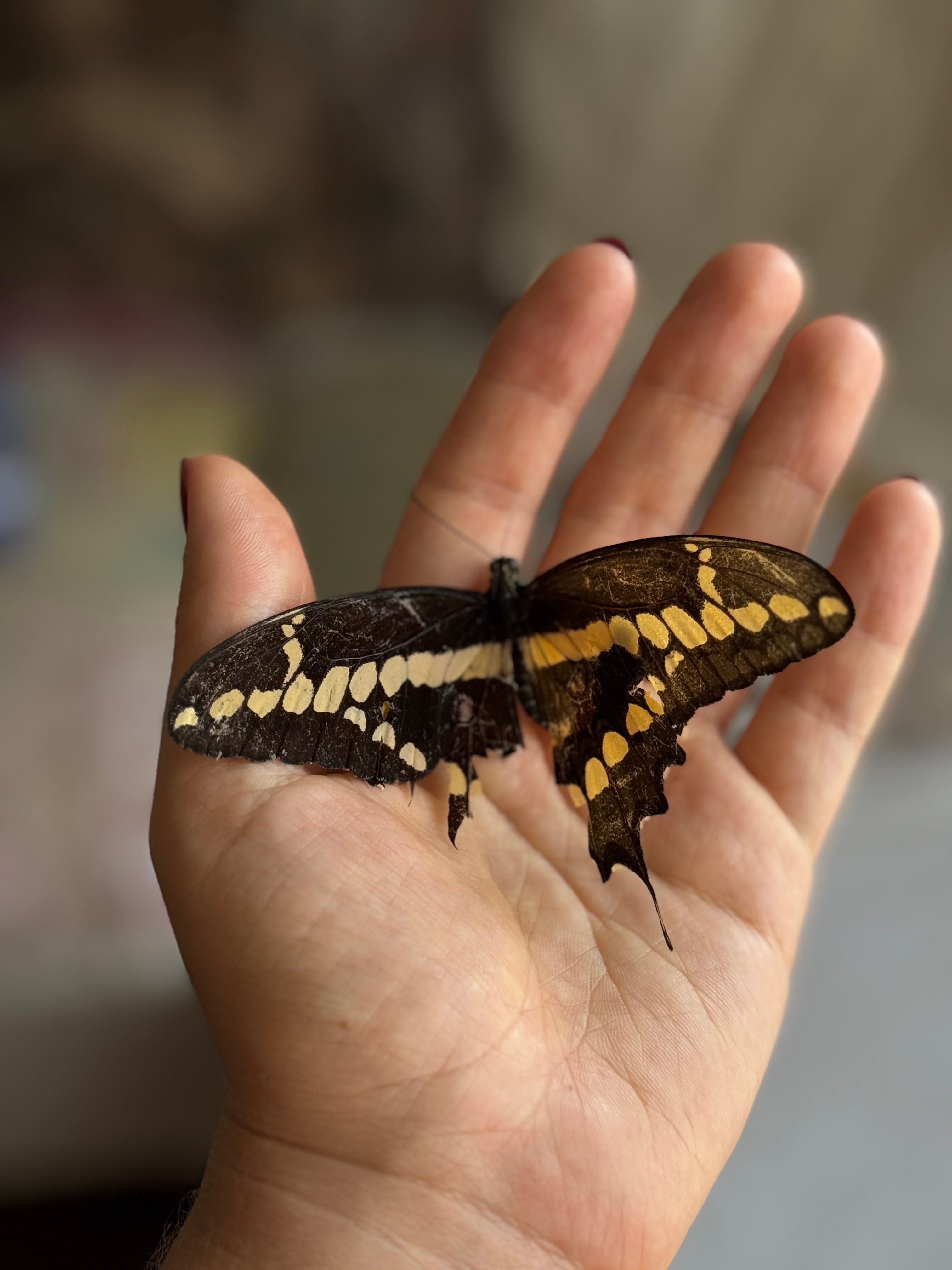
In Slavic tradition, butterflies (similarly to birds) are messengers. They are seen as carriers of ancestral messages, or even as temporary incarnations of our dead.
Her death wasn’t random. It was the mark of a message delivered.
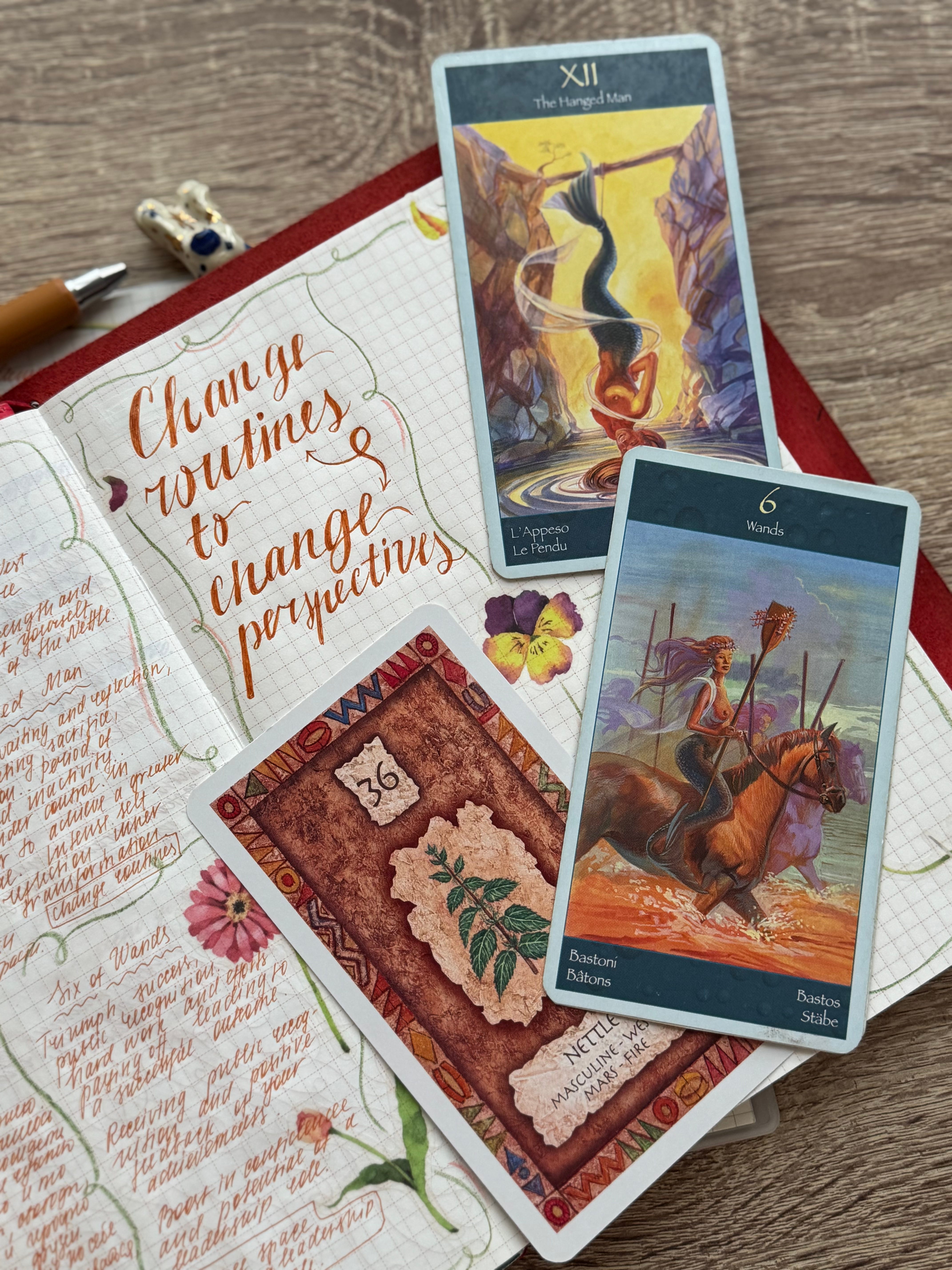
Now, the message during my last session was different: “Change routines to change perspectives.”
As I look for a way out of the darkness, the solution is elegant and simple: shift the inside, and the outside will follow.
My ancestors called me to overhaul my routines so I can create the life I want and deserve. They knew that first I had to start with my health, because “Здоровье дороже золота”- health is worth more than gold, or like my Erzya grandpa would say, “В здоровом теле – здоровый дух” - A healthy body holds a healthy spirit.
Decentering shame
This one definitely pushes against some deeply ingrained cultural habits—and I’m still working on it myself—but learning to decenter shame and guilt for things outside of my control has been crucial. I know that there’s no shame in admitting you’re struggling or asking for help. But like… do I KNOW know it? Do I know it in my body, or do I know it as a concept I keep repeating?
Shame often functions like an inherited control system—quiet, internalized, and generational. It teaches us to police ourselves long after the external pressures are gone. It whispers: don’t be a burden, don’t ask for too much, don’t fail. But all it really does is isolate us when we most need connection.
It’s also rare to find people who can truly hold space for you without rushing to fix things. Most of the time, we’re not looking to be “saved”—we just need someone to listen, to witness, to simply be there with us.
I would never hold your struggle against you, but do I do it to myself?
Hope is confidence. Confidence is hope.
Maybe it’s the post-Soviet upbringing that is marked by struggle from the moment I came out of the womb, but by now, at 36, I’ve lived through so many things that once felt unbearable. And yet, here I am: whole, strong, and unyielding.
I used to think hope was fragile—something soft and sentimental. But I’ve come to understand it differently. Hope isn’t passive. It’s not about waiting for things to get better. It’s the quiet confidence that you can get through it, even if you don’t yet know how. It's choosing to keep going—not because the road is easy, but because you trust yourself enough to walk it anyway.
Hope is also, despite everything, believing in the goodness of people. It’s me growing up with a constant feeling of hunger, but neighborhood kids teaching me to eat wood sorrels and showing me their secret spots of raspberry bushes. It’s me running from a drunk guy on my way home from a party, but someone stepping in to make sure I’m safe and walks me home.
So if you find yourself deep in a grave or just in a ditch you dug for yourself out of curiosity, survival, or sheer habit—know that you’re not alone down there. The climb out may not be graceful, and the tools might be mismatched, but they’re yours. Passed down, patched up, rediscovered.
We don’t need perfection to get out—we just need persistence, a sense of humor, a little ritual, some time in community with others without having to find solutions immediately, and the quiet, stubborn kind of hope.
You don’t have to know exactly where you’re going. Just know that you don’t have to stay where you’ve been.
Thank you for sharing this. I so recognize what you say. I think it was Clarissa Pinkola Estes said there are times in a woman's life when it's essential for her life that she doesn't stop to help others. Also I have observed - to my great surprise - that when I feed myself it often seems to nourish others close to me. I love your writing, especially the fascinating Erzya essays (I am half Finnish).
I was just having a pretty low moment when I´ve opened your post. I feel a little like seeing your post right at this moment was like you finding that butterfly. So for that, thank you.
I was wondering if you use tarot, and then I´ve seen a picture of some cards in the post. I pull for myself when I feel hopeless or lost, and it helps.